Why Parents Choose BJJ for Their Kids: Benefits Beyond Fitness
Building Confidence, Anti-Bullying Skills & Discipline Through Brazilian Jiu-Jitsu
Researching activities for your child and overwhelmed by options? Soccer for coordination, piano for discipline, tutoring for academics—but nothing that addresses confidence, bullying concerns, or character development? Worried your child lacks self-esteem, struggles socially, or needs structure that traditional sports don't provide?
Brazilian Jiu-Jitsu offers what team sports and academic activities can't: systematic confidence building through achievement, practical anti-bullying skills without promoting violence, genuine discipline through respectful instruction, and supportive community where your child develops friendships with peers pursuing similar growth. Whether your child is shy and needs confidence, athletic and needs challenge, or dealing with bullying and needs practical skills, BJJ provides measurable benefits that extend far beyond the mats.

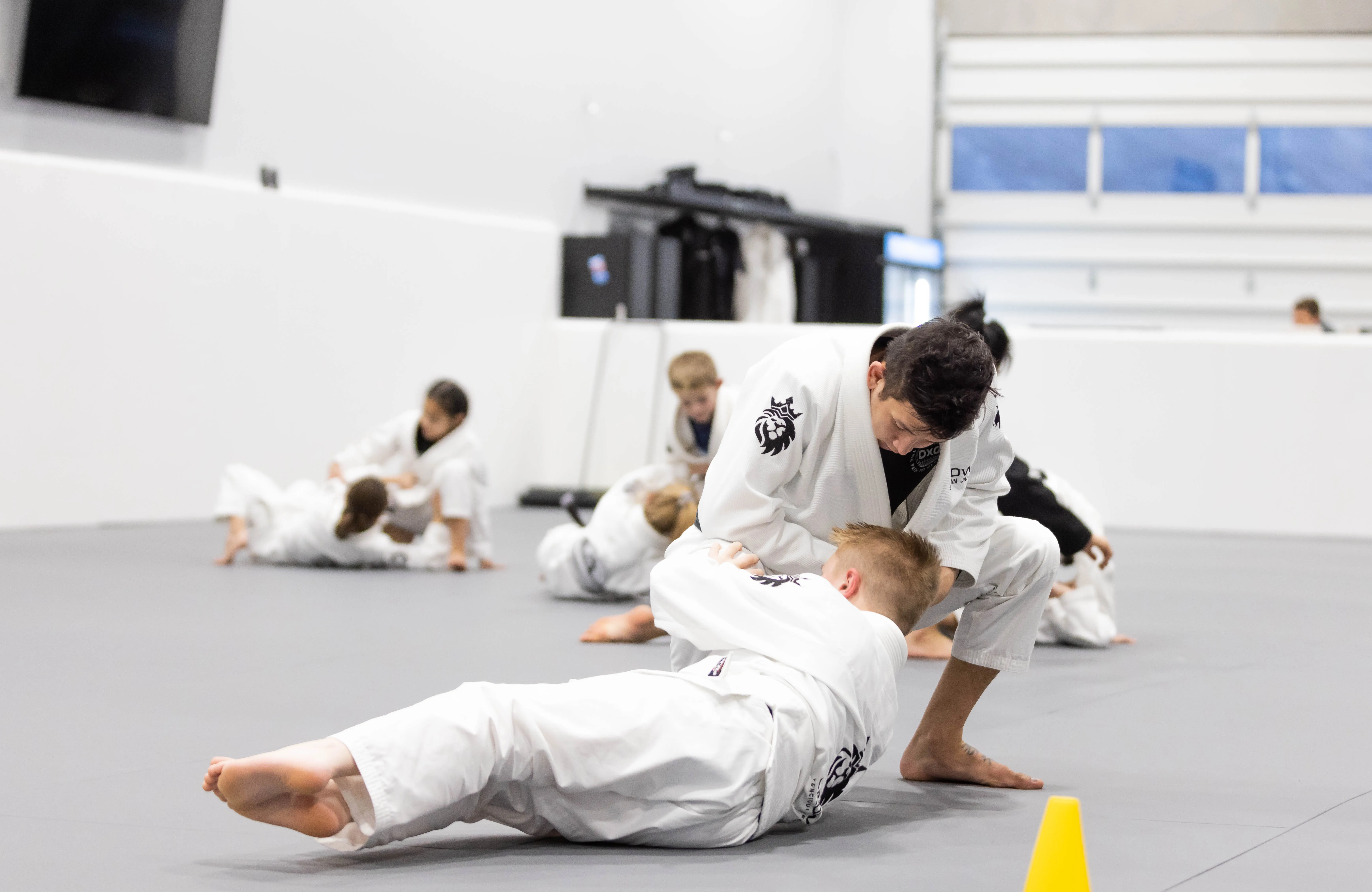
Why BJJ Develops Character Better Than Team Sports or Other Activities
Team sports teach valuable lessons about cooperation and physical fitness. But they rarely address confidence for non-athletic kids, provide no anti-bullying training, and don't systematically develop discipline or respect.
Brazilian Jiu-Jitsu is different. Every class includes explicit instruction on respect (bowing to partners, thanking coaches). Belt progression provides measurable achievement that builds genuine confidence. Techniques are specifically designed to work regardless of size or athleticism—meaning your child develops real capability, not just participation trophies.
Crown BJJ's youth program serves ages 4-17 across Bluffdale, Riverton, Draper, South Jordan, Herriman, and Utah County. Parents choose our program because we focus on character development and practical life skills—not just teaching kids to fight. The physical techniques are important, but the confidence, discipline, and anti-bullying skills are what parents value most.
Anti-Bullying Skills Without Promoting Violence
The #1 reason parents enroll kids in BJJ: bullying concerns. Here's how BJJ addresses bullying differently than other martial arts.
.avif)
Confidence Deters Bullies Before Physical Confrontation
- The Bullying Reality:
Bullies target children who appear vulnerable, lack confidence, or seem unlikely to defend themselves. Confident body language, assertive speech, and self-assured demeanor dramatically reduce bullying likelihood.
- How BJJ Builds This Confidence:
As your child progresses through belt ranks, masters new techniques, and successfully applies skills during controlled sparring, they develop genuine confidence based on actual capability—not empty affirmations.
- Visible Behavioral Changes Parents Notice:
- Better posture and eye contact
- More assertive verbal responses ("Stop, I don't like that")
- Reduced anxiety about social situations
- Willingness to stand up for themselves and others - Why This Matters:
Most bullying situations are deterred through confident presence before any physical confrontation occurs. Your child's improved confidence often stops bullying before it escalates.
Self-Control: Not Fighting Back Violently
- The Problem with "Fight Back" Advice:
Many martial arts inadvertently promote violence by teaching kids to punch or kick bullies. This creates legal liability (assault charges), school consequences (suspension), and doesn't address root causes.
- BJJ's Control-Based Approach:
Brazilian Jiu-Jitsu teaches controlling opponents without strikes. Your child learns to:
- Create distance and escape
- Control bully's movement without hitting them
- Pin aggressor safely without causing injury
- De-escalate through demonstration of capability - Real Scenario Example:
Bully pushes your child against locker. Instead of punching back (school suspension), your child:
1. Controls bully's arms (preventing further aggression)
2. Maintains distance (bully can't continue attack)
3. Verbally asserts boundary ("Stop. Leave me alone.")
4. Releases when bully backs down
No one gets hurt. Your child demonstrates they're not a victim. School can't punish for defending without violence. - Parent Peace of Mind:
You're not teaching your child to initiate violence. You're teaching them to control situations safely if violence finds them.
De-Escalation Techniques
- What Kids Learn:
- Verbal assertion before physical response
- Body language that communicates confidence without aggression
- Awareness of escape routes and adult help
- When to walk away versus when to stand ground - Instructor Emphasis:
Crown BJJ instructors explicitly teach: "Your job is to be safe, not to win fights." Physical techniques are last resort after verbal boundaries and seeking adult help have failed.
- Realistic Approach:
We don't promise your child will defeat every bully. We teach them to:
- Not be easy targets (confidence, awareness)
- Control situations without violence when possible
- Defend themselves physically if necessary
- Report to adults when situations require intervention
Physical Skills as Last Resort
- When Physical Defense Becomes Necessary:
If verbal boundaries fail, adult help isn't available, and bully initiates physical aggression, your child needs functional defensive skills.
- What BJJ Provides:
- Escaping from grabs, holds, and pins
- Controlling larger opponents through positioning
- Protecting themselves without striking
- Safely pinning aggressor until adult intervention - Real Parent Testimonial Example:
"My 10-year-old daughter was being grabbed and pushed by a larger boy at school. After 6 months of BJJ, when he grabbed her arm, she calmly removed his hand using a grip break we practice, stepped back, and said firmly 'Don't touch me.' He never bothered her again. She didn't hit him. She just demonstrated capability and confidence. That's what BJJ gave her." - Parent of current student
- School Consequences:
Most schools cannot punish students for non-violent self-defense. Controlling someone who initiated aggression is legally and ethically different than striking them.
Building Genuine Confidence Through Achievement
Not empty praise—real confidence from actual skill development.
Measurable Achievement Through Belt Progression
- The Belt System:
Youth BJJ uses colored belt system with stripes:
- White belt → Yellow belt → Orange belt → Green belt → Blue belt
- Each belt divided into 4 stripes before promotion
- Promotions based on demonstrated skill, not age or attendance - Why This Builds Confidence:
Your child earns advancement through genuine capability. Receiving a new stripe or belt isn't participation trophy—it's recognition of skills they can actually demonstrate.
- Psychological Impact:
Children internalize: "I worked hard, developed skill, earned recognition." This creates growth mindset and genuine self-esteem based on effort and achievement.
- Comparison to Participation Trophies:
Team sports often give trophies just for participating. BJJ only awards belts when students demonstrate proficiency. This makes each promotion meaningful and confidence-building.
Overcoming Challenges Builds Resilience
- The BJJ Challenge:
Learning Brazilian Jiu-Jitsu is difficult. Techniques don't work immediately. Your child will struggle, get frustrated, and want to quit at times.
- Why This Matters:
Overcoming difficulty teaches resilience. When your child masters a technique they struggled with for months, they learn: "I can accomplish hard things through persistence."
- Character Development:
- Learning to accept failure and try again
- Developing patience (skills take time)
- Building work ethic (consistent practice required)
- Managing frustration productively - Real-World Transfer:
These lessons apply to school challenges, social difficulties, and future career obstacles. A child who perseveres through difficult BJJ training develops resilience for life.
Public Performance Through Bow-In and Demonstrations
- Class Structure:
Each class begins with students lining up, bowing to instructors, and reciting martial arts principles. Advanced students occasionally demonstrate techniques for class.
- Why This Matters:
Public speaking and performance anxiety are common childhood struggles. BJJ provides low-stakes practice:
- Speaking in front of peers during class
- Demonstrating techniques when asked
- Answering instructor questions about technique - Confidence Transfer:
Children who are comfortable performing in BJJ class become more confident in school presentations, social situations, and public speaking.
Teaching Discipline Through Structure, Not Punishment
BJJ develops self-discipline through positive structure and explicit respect training.
Following Instructions and Focus
- Class Requirements:
- Listen when instructor demonstrates
- Follow directions immediately
- Stay focused on assigned task
- Ask questions appropriately - How This Develops Discipline:
Unlike video games or unstructured play, BJJ requires sustained attention and following multi-step instructions. Children develop ability to focus, process verbal instructions, and execute tasks properly.
- Teacher Reports:
Multiple Crown BJJ parents report teachers commenting on improved classroom behavior and focus after starting BJJ training.
Respect for Coaches, Partners, and Opponents
- Explicit Respect Training:
- Bow to coaches at beginning and end of class
- Shake hands with training partners before/after drilling
- Thank partners who help them learn
- Address instructors respectfully - Why This Matters:
Modern culture doesn't always teach children explicit respect for authority figures and peers. BJJ provides structured practice in demonstrating respect through specific actions.
- Social Skills Development:
Children learn appropriate ways to show respect, gratitude, and courtesy. These social skills transfer to interactions with teachers, parents, and peers.
Self-Discipline: Doing What's Right Without Supervision
- Internal Motivation:
As children progress in BJJ, they develop internal drive to improve—not just external rewards (parent approval, instructor praise).
- Homework Without Reminders:
Several Crown BJJ parents report children self-motivating to practice techniques at home, watch instructional videos, or attend extra classes without parental prompting.
- Character Transfer:
Self-discipline developed through BJJ training often improves homework completion, chore responsibility, and general follow-through on commitments.
Developing Healthy Bodies and Habits Early
Physical benefits that establish lifelong fitness foundation.
Coordination, Balance & Body Awareness
- Motor Skill Development:
BJJ develops fundamental movement patterns:
- Balance and stability through stance work
- Coordination through complex technique sequences
- Spatial awareness (knowing where your body is)
- Left-right integration (using both sides equally) - Age-Appropriate Development:
- Ages 4-6: Gross motor skills (running, rolling, basic movements)
- Ages 7-12: Fine motor skills (grip control, precise positioning)
- Ages 13-17: Advanced coordination and athletic performance - Athletic Foundation:
Children who develop coordination and body awareness through BJJ perform better in other sports and physical activities.
Flexibility and Strength Without Weightlifting
- Natural Strength Development:
BJJ builds functional strength through:
- Supporting own body weight during movement
- Controlling partner's weight during technique
- Core engagement during all activities
- Progressive resistance as students advance - Flexibility Through Practice:
Unlike forced stretching, BJJ develops flexibility through:
- Dynamic movement drills
- Technique execution requiring range of motion
- Gradual improvement over time - Safety for Growing Bodies:
No heavy weightlifting or high-impact stress on developing joints. BJJ provides age-appropriate strength development.
Healthy Habits and Screen-Time Alternative
- The Screen Time Problem:
Modern children average 7+ hours daily screen time. This contributes to obesity, poor posture, reduced social skills, and attention problems.
- BJJ as Active Alternative:
Training 2-3x weekly provides:
- 3-4.5 hours physical activity
- Face-to-face social interaction
- Mental engagement (problem-solving, learning)
- Achievement-based dopamine (not screen-based) - Habit Formation:
Children who develop active lifestyle early are more likely to maintain fitness throughout life. BJJ establishes exercise as normal part of routine.
Making Friends and Developing Social Competence
BJJ provides structured social environment where children develop genuine friendships.
Making Friends Through Shared Challenge
- The Social Bond:
Training partners develop strong friendships because they:
- Help each other learn techniques
- Support each other through challenges
- Celebrate each other's promotions
- Share common interest and goals - Diverse Peer Group:
Unlike school where children socialize mainly with same-age classmates, BJJ brings together:
- Different ages (7-year-olds training near 15-year-olds)
- Different schools (public, private, homeschool)
- Different neighborhoods and backgrounds - Friendship Benefits:
Children develop social connections outside school environment, providing peer support independent of school social dynamics.
Working with Partners: Cooperation and Communication
- Partner-Based Learning:
Every technique is practiced with partner. This requires:
- Clear communication ("Can you do that slower?")
- Patience when partner struggles
- Celebrating partner's success
- Accepting feedback gracefully - Social Skills Development:
- Asking for help appropriately
- Offering help without being condescending
- Working cooperatively toward shared goal
- Managing frustration when partner makes mistakes - Real-World Application:
These cooperation skills transfer to school group projects, team sports, and future workplace collaboration.
Supportive Environment: No Bullying Tolerated
- Crown BJJ Culture:
Zero tolerance for bullying, mockery, or disrespectful behavior. Instructors actively cultivate supportive environment where:
- Advanced students help beginners without judgment
- Mistakes are learning opportunities, not sources of shame
- Students cheer for each other's achievements
- Everyone feels psychologically safe - Why This Matters:
Many children struggle socially because school environments can be harsh and judgmental. BJJ provides safe social environment where respect is explicitly taught and enforced.
- Parent Observations:
Multiple parents report their socially anxious or bullied children thriving at BJJ because the environment is genuinely welcoming and supportive.
Teaching Discipline Through Structure, Not Punishment
BJJ develops self-discipline through positive structure and explicit respect training.
Following Instructions and Focus
- Class Requirements:
- Listen when instructor demonstrates
- Follow directions immediately
- Stay focused on assigned task
- Ask questions appropriately - How This Develops Discipline:
Unlike video games or unstructured play, BJJ requires sustained attention and following multi-step instructions. Children develop ability to focus, process verbal instructions, and execute tasks properly.
- Teacher Reports:
Multiple Crown BJJ parents report teachers commenting on improved classroom behavior and focus after starting BJJ training.
Respect for Coaches, Partners, and Opponents
- Explicit Respect Training:
- Bow to coaches at beginning and end of class
- Shake hands with training partners before/after drilling
- Thank partners who help them learn
- Address instructors respectfully - Why This Matters:
Modern culture doesn't always teach children explicit respect for authority figures and peers. BJJ provides structured practice in demonstrating respect through specific actions.
- Social Skills Development:
Children learn appropriate ways to show respect, gratitude, and courtesy. These social skills transfer to interactions with teachers, parents, and peers.
Self-Discipline: Doing What's Right Without Supervision
- Internal Motivation:
As children progress in BJJ, they develop internal drive to improve—not just external rewards (parent approval, instructor praise).
- Homework Without Reminders:
Several Crown BJJ parents report children self-motivating to practice techniques at home, watch instructional videos, or attend extra classes without parental prompting.
- Character Transfer:
Self-discipline developed through BJJ training often improves homework completion, chore responsibility, and general follow-through on commitments.
Common Self-Defense Questions Answered
BJJ is highly effective for self-defense. The sport techniques (guard positions, escapes, submissions) are the same skills needed in ground-fighting self-defense scenarios. While sport BJJ has rules (no striking, no eye gouges), the fundamental ability to control and submit resisting opponents transfers directly to self-defense.
Basic defensive competence—ability to escape from underneath larger opponent, defend chokes, and avoid being controlled—develops in 6-12 months of consistent training (2-3x weekly). Advanced proficiency takes years, but essential self-defense skills develop relatively quickly.
BJJ and Krav Maga serve different purposes. Krav Maga addresses scenarios BJJ doesn't (weapons, multiple attackers). BJJ develops deeper skill through resistance training that Krav Maga typically lacks. For unarmed self-defense against single attacker, BJJ's tested techniques provide more reliable skills than Krav Maga's choreographed responses.
Yes. BJJ was specifically designed to allow smaller, weaker individuals to defend against larger, stronger attackers using leverage. Many women successfully use BJJ in self-defense because techniques don't depend on strength. However, size difference matters—realistic training against larger male partners is essential.
No. Competition is optional. However, occasional competition provides valuable experience applying skills under pressure against non-cooperative opponents—closest simulation to self-defense scenarios. Many students develop excellent self-defense skills through regular training without ever competing.
Both matter. However, since 70-90% of fights end on ground where striking is limited, grappling provides broader self-defense foundation. Ideal self-defense combines striking awareness (boxing/kickboxing) with grappling expertise (BJJ/wrestling). If choosing one, BJJ addresses more common self-defense scenarios.
Try Women's BJJ Free at Crown BJJ Bluffdale
You understand why BJJ works when traditional self-defense fails. You know the statistics supporting ground fighting importance. You've seen how BJJ compares to other martial arts for practical self-defense.
The question is whether you're ready to develop genuine self-defense skills through resistance-tested training rather than hoping choreographed techniques might work when needed.
Crown BJJ offers three approaches to learning self-defense:
- Women's Self-Defense: Focused program for practical safety scenarios
- Adult BJJ: Comprehensive skill development through ongoing sport training
- Corporate Self-Defense: Customized workplace safety training
Choose the approach that fits your goals, schedule, and learning preferences. All three options provide more realistic self-defense preparation than weekend seminars promising quick fixes.
Book your free trial or contact us to discuss which program best addresses your specific self-defense goals.
Explore Self-Defense Programs
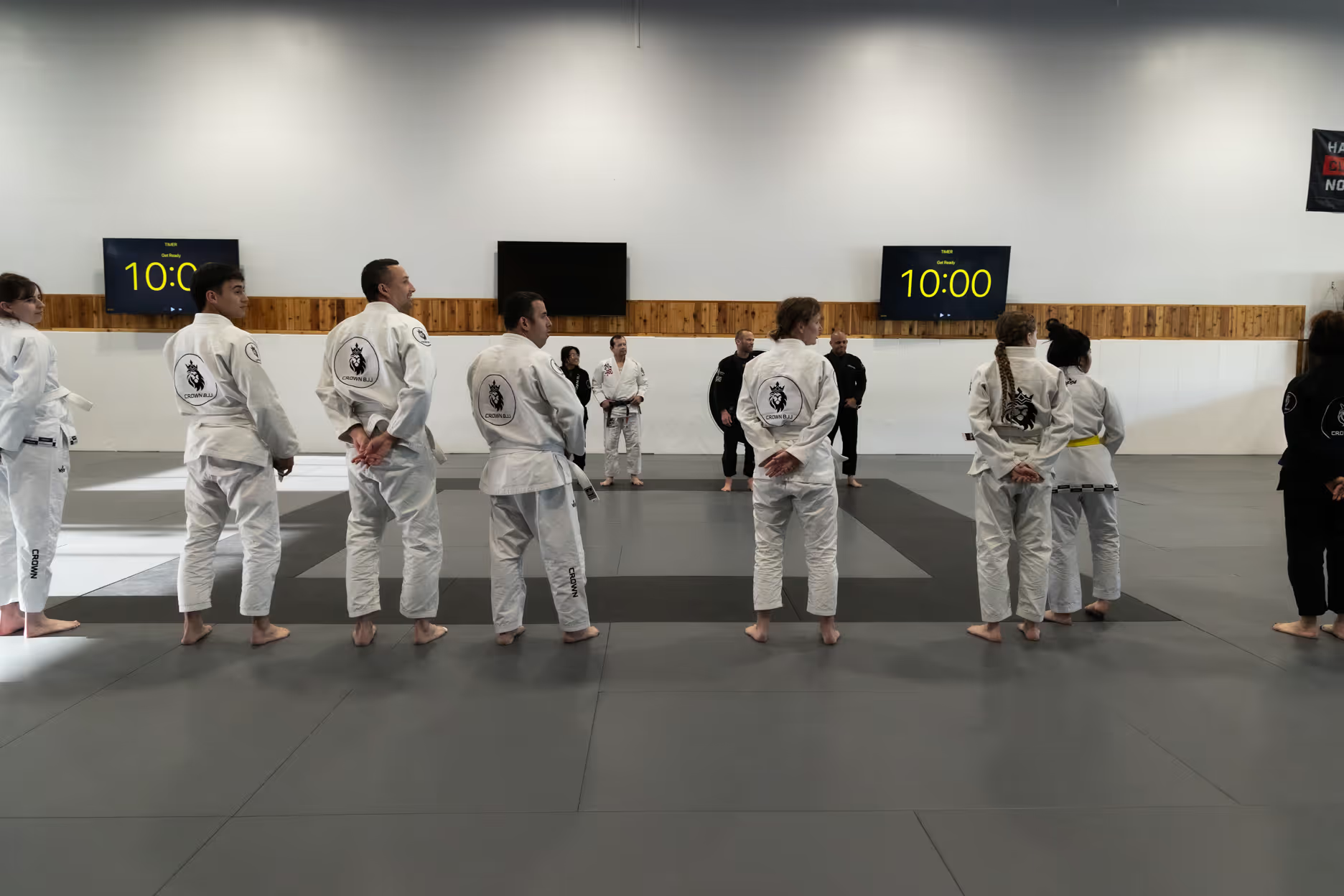

Crown BJJ Self-Defense Training
Women's Self-Defense | Adult BJJ | Corporate Programs
Evidence-based training | Resistance-tested techniques | Practical skills
Questions about self-defense training?
Text/call us at 801-251-6375 or email info@crownbjj.com




.webp)
.webp)
.webp)